

SOGETSU 100 YEARS OF HISTORY
SOGETSU 100 YEARS OF HISTORY
Sogetsu Ikebana will celebrate its 100th anniversary in 2027. Sogetsu Ikebana has evolved together with the times while maintaining a close relationship with society. Please take a look at the 100 years of history created by Sogetsu and its future prospects through the activities of successive Iemotos.
1927〜1944
Foundation [Aiming for a New Style of Ikebana]
Sofu Teshigahara was born in Sakai, Osaka, in 1900 as the eldest son of the Ikebana artist Hisaji Teshigahara. He later parted ways with his father and founded the Sogetsu School in 1927, bringing a breath of fresh air to the world of Ikebana.
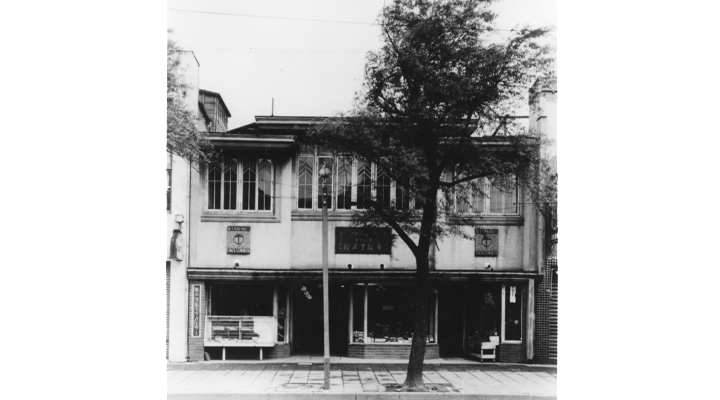
1928: Held the first Sogetsu Ikebana Exhibition. The photograph shows the fruit parlor “Senbikiya” in Ginza, which served as the venue.
(1/6)
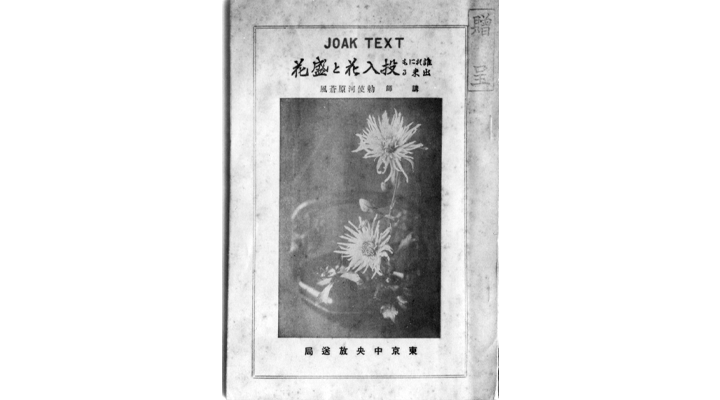
Introduced on the radio and in magazines like Shufu no Tomo (Housewife’s Friend), gaining popularity. In November 1929, he began broadcasting “Nageire and Moribana Anyone Can Do” on the NHK radio. The photo shows its textbook.
(2/6)
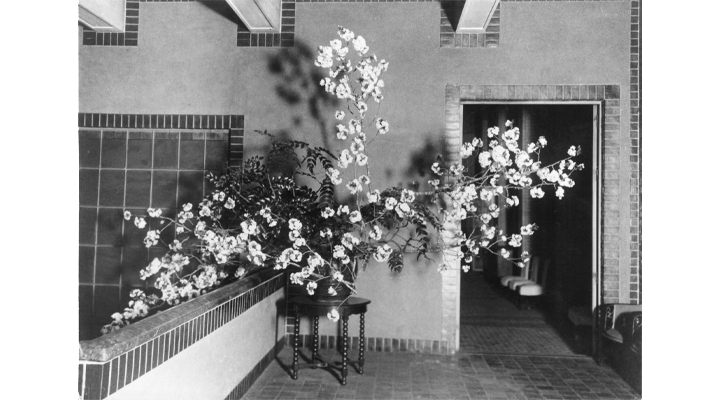
1932: Held the 7th Sogetsu Ikebana Exhibition at the Josui Kaikan in Hitotsubashi, Tokyo. While introducing an admission fee system, Sofu experimented with “Sogo-ka” (Integrated Flower Arrangement), using music and lighting to enhance the atmosphere of the venue. The following year, he held his first solo exhibition at the same venue. The photograph shows a work from that solo exhibition.
(3/6)
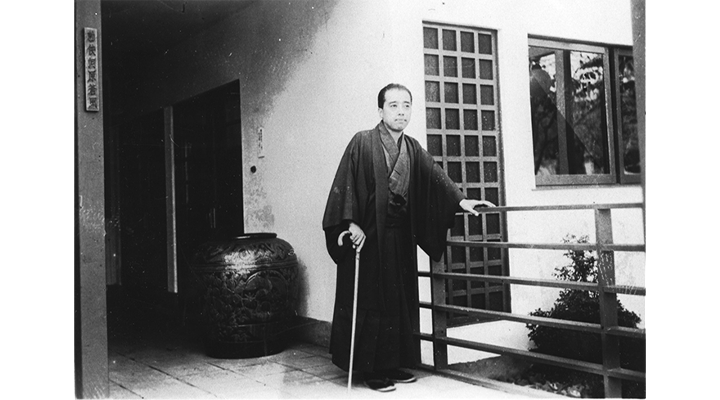
1933: Constructed the Sogetsu School Lecture Hall in Kojimachi Sanbancho. It became the hub for Sogetsu learning, where lessons continued even during the war. Although the 7th Sofu Solo Exhibition was held there in October 1943, the hall was destroyed by fire during the major air raid in May 1945. The photograph shows Sofu in front of the lecture hall.
(4/6)
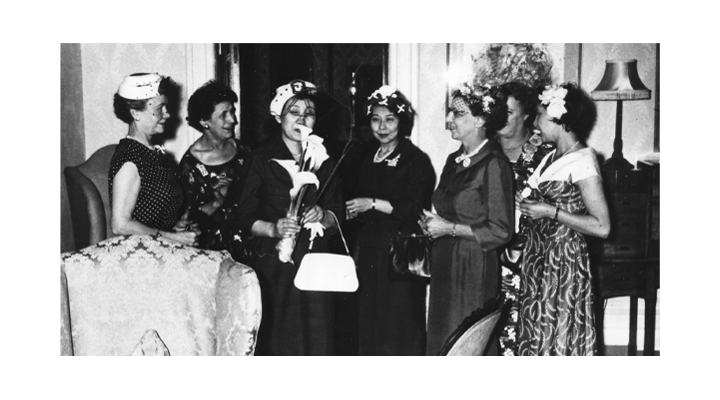
1939: Stella Coe, the first foreign instructor, returned to the United States, leading to the birth of the first overseas classroom in Tennessee. The photograph shows the subsequent first Sogetsu exhibition held in the UK.
(5/6)
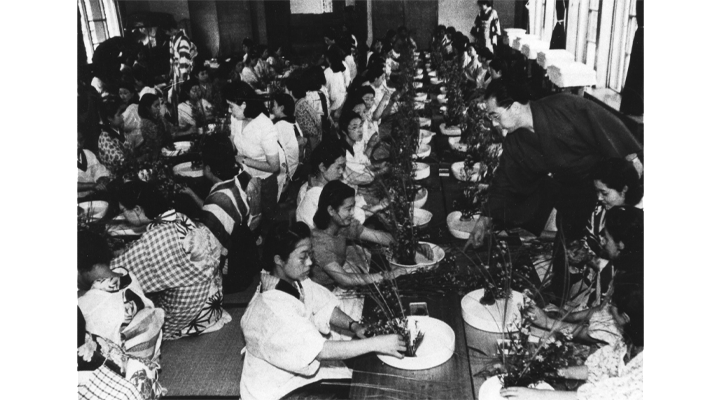
1941: A scene from an Ikebana lesson during the war.
(6/6)
1945–1954
Reconstruction [Rebirth from the Ashes]
After the war, Ikebana was enthusiastically welcomed as a symbol of reconstruction by people seeking spiritual enrichment and culture, with Sogetsu at its center. Activities such as teaching Ikebana to the wives of the Allied Occupation forces also began.
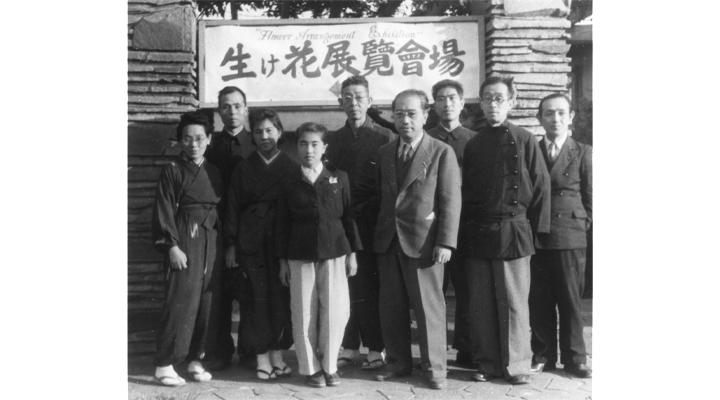
1945: Held the first post-war Ikebana exhibition, the “Sofu Teshigahara and Houn Ohara Joint Exhibition,” in Tokyo, which had become a burnt-out wasteland (at the Kanda Shufu-no-Tomo Employee Gymnasium). The photograph shows the entrance of the exhibition venue, featuring Sofu and Kasumi on the far left.
(1/5)
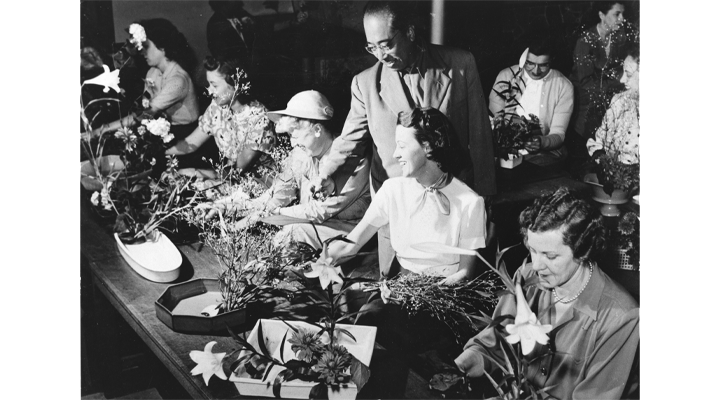
1946: Starting in autumn, Sofu began teaching Ikebana to the wives of the Allied Occupation forces, including the wife of General MacArthur.
(2/5)
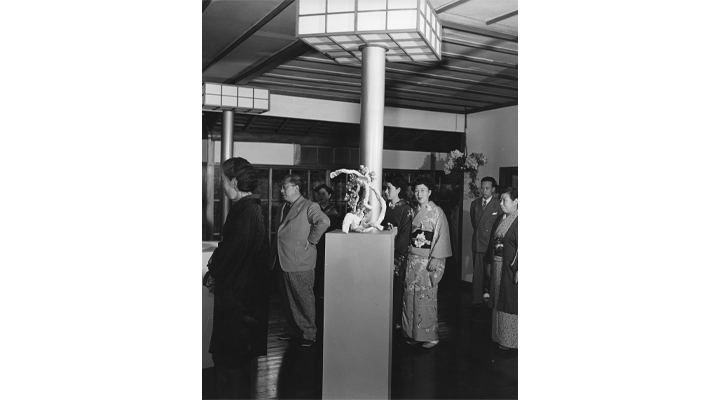
1947: Relocated the Sogetsu School classroom to Mita Tsunamachi. At the same location in 1951, Sofu held a solo exhibition, showcasing works made of plants covered in plaster or colored, which were acclaimed as “Objet Ikebana.”
(3/5)
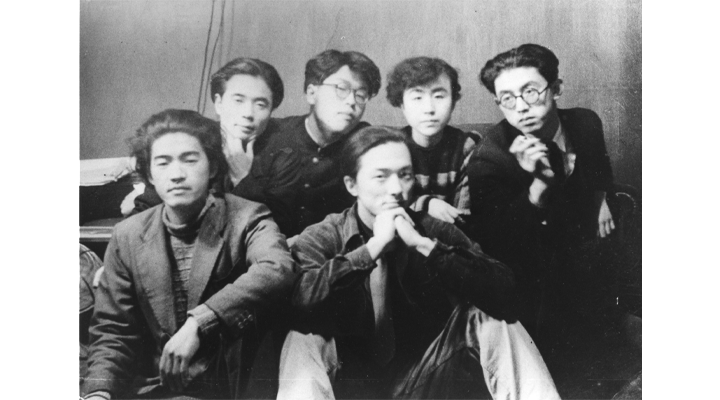
1951: Hiroshi, who had graduated from the Tokyo Art School (now Tokyo University of the Arts) and was participating in an avant-garde group, founded the magazine Sogetsu together with his companions from “Seiki” (The Century). Front row from the right: Hiroshi, Kobo Abe; back row from the left: Hiroshi Katsuragawa, and on the right, Shinichi Segi.
(4/5)
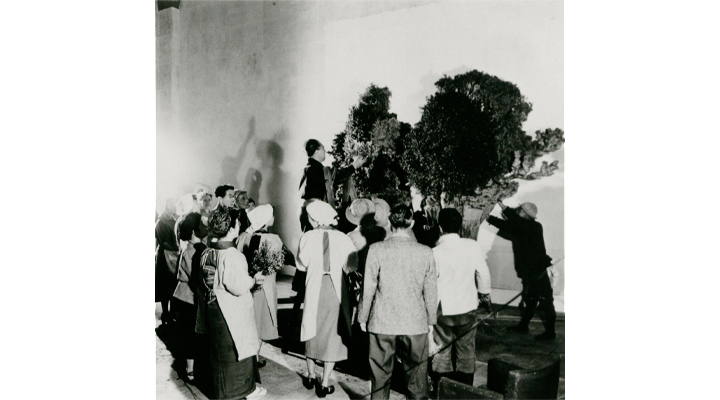
1952: At his solo exhibition venue at Josui Kaikan, Sofu creates an arrangement titled Kyozo II (Virtual Image II).
(5/5)
1955–1969
Expansion [Expanding Overseas, Becoming a Center of Culture]
Sogetsu gained attention from overseas, and Sofu was warmly welcomed in various countries. As the name became widely known, Sogetsu took root around the world.
1970–1980
Consolidation [From Sofu to Kasumi, and Hiroshi: Becoming an Icon of Art]
Sogetsu became an essential presence in the Japanese art scene. In 1979, Sofu passed away. His eldest daughter, Kasumi, assumed the position of the second Iemoto (Headmaster), but after she fell ill in 1980, Hiroshi became the third Iemoto.
1981〜2000
Transformation [Taking the Next Step: The Era of Hiroshi]
Hiroshi was active across various genres, including ceramics, calligraphy, and performing arts. Seeking new ways to engage with society, he advocated for “Three-Dimensional Sculptural Form” (Rittai Zokei), which allowed Ikebana to expand into all kinds of spaces. He ushered in a new era with his bamboo works.
2001〜
Contemporary[Without Fear of Change, Believing in the Power of Flowers]
In 2001, Hiroshi passed away, and his second daughter, Akane, assumed the position of the fourth Iemoto. While confronting the demands of the changing times, she has pursued her unique style of Ikebana through initiatives such as “Iemoto Ikebana LIVE” and collaborations with various other fields.